ADVERTISE WITH US HERE FOR YOUR OWN EXPANSION AND PROSPERITY

.
.

President of Tanzania hon Jakaya Kikwete

President was greeting the official during the 47th commemorations of the United republic of Tanzania that was held in Tanzania Islands of Zanzibar .Picture by rahma Hashim-Mgonjahmedias.

The beautful buildings of the central bank of the united republic of tanzania

These two twin buildings are of the ministry of finance in Tanzania.

Advertise with us today and expand your prosperity

Contact us today and Advertise your buisness or any other thing and earn more revenue.

Advertise with us today and expand your prosperity

Contact us today and Advertise your buisness or any other thing and earn more revenue.

President of Tanzania Hon.Jakaya Kikwete

The 47th commemorations of the United republic of Tanzania. Picture by Jacquelin Jackson - MgonjahMedias.

President of the united republic of Tanzania Hon.JK together with the military commanders

This was the 47th commemorations of the united republic of Tanzania and the President was inspecting the Guards prepared by the Tanzania Peoples Defence force(TPDF),It was held in Tanzania Islands.Picture by Mponela Mathei -MgonjahMedias.

Thursday, April 21, 2011

HOW DO WE FALL ASLEEP AND WHAT HAPPENS TO US WHEN WE SLEEP? ~ MgonjahMedia International

Wednesday, March 9, 2011

Violence in Ivory Coast spirals


 Violence in Ivory Coast spirals

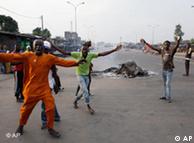
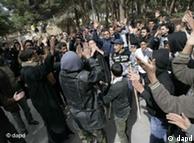
Supporters of Alassane Ouattara on the street
 

The protests in the Arab world are pushing the crisis in Ivory Coast out of the international focus. But the turmoil there is escalating. Thousands are on the run and the UN Security Council is warning of a civil war.


African Union representatives are meeting in the Ethiopian capital Addis Ababa on Thursday to try to end the increasingly bloody dispute over the Ivory Coast presidency. But violence is continuing in the western African country.
According to media reports, at least four more people were killed on Tuesday at a protest in the economic capital Abidjan demanding Laurent Gbagbo quit. The former president continues to refuse to step down and cede power to the internationally recognized president of Ivory Coast, President Alassane Ouattara, who won last November's elections.
The deaths in Abidjan occurred at a march protesting the killing of six unarmed women during a similar event last week. On Thursday, hundreds of women in colorful clothing had taken to the streets in the pro-Ouattara slum of Abobo to show their support for their president. But the demonstration was brutally struck down by soldiers loyal to Gbagbo.
"Our women just wanted to demonstrate peacefully," one eyewitness said. "Of course, they weren't armed. And then all of sudden, these armed vehicles appeared and Gbagbo's people started shooting all over the place."
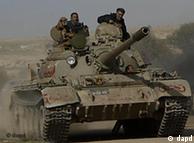
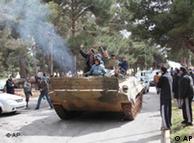
Despite a video published by news agency AP clearly showing tanks of the pro-Gbagbo army quickly leaving the scene of the crime, the former president denies that his people were responsible for last week's massacre. Rather, he blames the UN peacekeeping mission in Ivory Coast for "infiltrating" the country with "terrorists." They are responsible for these women's deaths, he claimed.
Facilitating humanitarian aid
The United Nations refugee agency has appealed to the rival groups to support efforts to deliver urgently needed humanitarian aid to those affected by the post-election turmoil and avoid putting civilians at risk.
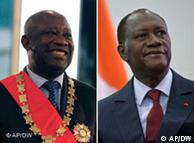
Bildunterschrift: Großansicht des Bildes mit der Bildunterschrift:  Gbagbo, left, refuses to hand over power to Ouattara
Gbagbo and OuattaraThe UN High Commissioner for Refugees (UNHCR) said on Tuesday that the unrest in the West African country has displaced between 200,000 and 300,000 people in Abidjan. Another 70,000 inhabitants of the country's western region have fled their homes and crossed over into neighboring Liberia as a result of violence.
Hamadoun Touré, spokesman for the UN peacekeeping mission, said the situation was very dangerous for humanitarian aid workers who are trying to help with the dead and injured.
"That's why we've been calling for a truce in Abobo, so that humanitarian workers can get in, take the bodies, maybe even have a burial or find a morgue for them," Touré said.
In Abobo, Gbagbo's soldiers are fighting against pro-Ouattara insurgents, who call themselves the "invisible commandos." Gbagbo's feared Young Patriots militia group - many armed with AK-47s, machetes and knives - have set up roadblocks. Every day, there are dead and injured, most of them civilians. Hawa, who heads an NGO and does not want to disclose her last name for security reasons, said the people will not back down, though.
"Gbago, leave, the women yelled at that protest. But we've been demanding that for far too long," Hawa said. "I don't know what the international community is actually still waiting for. Should there be more dead, more atrocities? Day in, day out, it's the same horrible picture. And because nothing is happening, we're going to continue marching!"
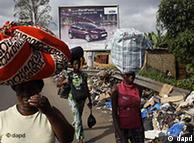
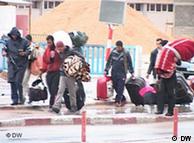
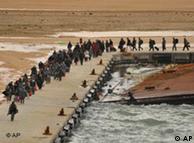
Women fleeing ongoing violence in the Abobo neighborhood carry belongings on their heads More fighting expected
Apparently, both sides are currently rearming with outside help to be ready when the real fighting begins. Gbagbo doesn't appear to be running out of money, despite the ban on cocoa exports and despite international sanctions.
Bildunterschrift: Großansicht des Bildes mit der Bildunterschrift:  Thousands are fleeing the region
On the other side, the pro-Ouattara rebels in the north, the Forces Nouvelles or New Forces, are getting ready to fight. They have already captured areas in the western part of the country. It is already evident now what a civil war would mean for the country, said Ouanmourou Koné from the University of Bouaké, the rebel stronghold in the north. He said there is no water or electricity in the city.
"It's incredible what world we are living in," he said. "It is desperation. There is no life in Bouaké now. I don't understand how they want us to live here. It's terrible. That's why I say politicians are not human beings. Those politicians should all go to hell! That's what they deserve."
It could be the beginning of the civil war that international observers have warned of for months already. It was over three months ago that Ivory Coast wanted to elect a new president and end the more than 10-year political chaos in the country. But the crisis is escalating further.
It seems that the power struggle that has been smoldering between Gbagbo and Ouattara for months now has in fact reached the point where it could revert to war at any moment. Ouattara is still holed up in a hotel in Abidjan with his closest advisors. An endless coming and going of mediators from the African Union, meanwhile, are trying to force Gbagbo to resign - in vain. He sends them all home empty-handed. Meanwhile, the entire world has its eyes on Libya while the bloodshed continues - in Abobo and soon maybe in the rest of Ivory Coast.

Sunday, March 6, 2011

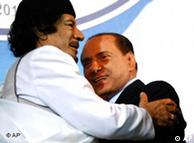
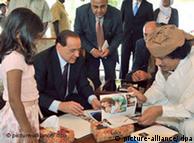
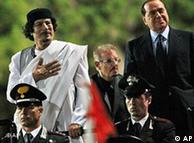
France and Italy share strong ties with Libya's Gadhafi

France and Italy share strong ties with Libya's Gadhafi


France and Italy have condemned Libya's violent repression of anti-regime protests, but both European nations have a lot at stake when it comes to the oil-rich country. DW takes a look at relations between the nations.

 
As the Libyan regime comes under pressure, so too do the country's northern partners. Both the French and Italian governments share lucrative economic ties with Libya.
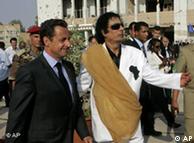
The two European Union members have come out against Libyan leader Moammar Gadhafi's use of force to crush protests, with French President Nicolas Sarkozy calling for an "immediate halt" to the violence.
Yet questions remain in both countries as to how unrest - and a potential toppling of Gadhafi's regime - could affect national interests.
'Reparations' for immigrant control
Rome's relations with Tripoli are primarily influenced by Italy's dependence Libya to stem illegal immigration from Africa. The two countries' coast guards cooperate in detaining undocumented migrants in the Mediterranean and sending them back to their countries of origin.
Libya's role in keeping out unwanted migrants is worth as much as $5 billion (3.7 billion euros) to Italy, which the latter pledged to invest in Libya's infrastructure over the next 25 years as "reparations" for its bloody 1911-43 colonial rule.
The funds had been earmarked to construct, among other things, a coastline highway in the North African country.
The Italo-Libyan anti-immigration practices agreed to by Gadhafi and Italian Prime Minister Silvio Berlusconi in their 2008 friendship treaty, violate the United Nations Convention Relating to the Status of Refugees. Yet so far only rights groups have raised protest.
Italian President Giorgio Napolitano has defended Gadhafi's questionable human rights record, saying he had heard Gadhafi "speak with great moderation and a sense of duty when it comes to the most difficult problems facing the African continent."
Italo-Libyan economic ties
Libya's friendship has also brought security to Italy's energy supply, and Italian energy group ENI has a large presence in the oil-rich nation.
Likewise, Gadhafi played a role in the Italian economy since the 1970s. Today, Libya has investments in Italian aircraft manufacturer Finmeccanica and Italy's second-largest bank, Unicredit.
Deceased Italian industrialist Giovanni Agnelli once defended selling shares of automaker Fiat to Gadhafi, claiming that having oil-rich nations invest in the West would deter them from raising oil prices to the West's detriment.
A tent in Paris
In December 2007, a massive bedouin-style tent in central Paris became the symbol of France's conciliatory attitudes toward Libya.
Gadhafi ordered the tent be pitched in front of the Hotel Marigny, where important foreign guests to France are housed. He used it to receive guests during his stay, which he extended from three days to six.
French Secretary of State for Human Rights Rama Yade was outraged by Gadhafi's visit, saying France was "not a doormat for a leader - terrorist or no terrorist - on which to wipe his feet of the blood of his crimes."
Yet, by the time Gadhafi returned home, France had landed 10 billion euros in deals, including an atomic energy plant for Libya, a desalination plant, and 21 Airbus planes.
French Prime Minister Francois Fillon defended France's interest, making reference to five Bulgarian nurses released from Libyan custody a half a year earlier, after receiving death sentences on charges they spreading HIV to children.
"France is receiving Col. Gadhafi, because Col. Gadhafi liberated the Bulgarian nurses. And because Col. Gadhafi is campaigning for the reintegration of his country into the international community," he said, warning, "All those who want to lecture us should carefully weigh their words."
The nurses were released under French pressure a day after Sarkozy and Gadhafi met in Tripoli to forge plans for the Franco-Libyan deals that were later signed in Paris.
France began cultivating its relationship with Libya in 2003, under Sarkozy's predecessor, Jacques Chirac. Chirac flew to Libya shortly after the United Nations lifted sanctions against the country.
During that visit with Gadhafi, Chirac demanded 170 million euros in reparations from Libya for the 1989 bombing of a French DC-10 jet, in which 170 were killed, including 53 French citizens.

Oil prices spike in response to Libyan unrest

Oil prices spike in response to Libyan unrest


Libya produces a sizeable chunk of the world's oil, and is Europe's third largest supplier. Oil prices jumped on Tuesday in response to the violence, and pressure is mounting on OPEC to free up more supplies.

 
The key oil benchmark prices in Europe and the US jumped to two-and-a-half-year highs on Tuesday, as the markets respond shakily to the escalating violence in Libya.
Brent Crude from the North Sea briefly hit $108.57 (79.44 euros) in morning trade, before dropping during the course of the day. Meanwhile, West Texas Intermediate's prices for future deliveries in April soared by almost seven dollars to $94.49 at one point in Tuesday trading. Most prices for imported oil on the European and US markets are based on these so-called benchmark indicators.
"It's like one of those Australian bushfires - once it takes hold, it's very difficult to put out," Michael Hewson, an analyst for CMC Markets said. "Until the situation in the Middle East settles down, you are going to have very wild price swings."
Libya is a major African oil producer and a member of the Organization of Petroleum Exporting Countries (OPEC), exporting most of its oil to European countries like Italy, Germany, Spain and France.
"I think [OPEC] should get involved soon, because we need some signals for the market," energy analyst for the German Institute for Economic Research, Claudia Kemfert, told Deutsche Welle. "Right now, if Libya was to stop oil production, we would lose 2 percent of the global oil supply."
Kemfert said that, while this figure may not be particularly high, OPEC would be well advised to increase production capacities in other member states, so as to calm the market's concerns over further unrest in the region hitting oil supplies elsewhere.
OPEC: we're watching, and we're ready
OPEC representative and United Arab Emirates energy minister Mohammad bin Dhaen al-Hamli said on Tuesday that the market was reacting to the violence in the Middle East, not to fundamentals, saying there was no need to free up extra oil supplies at present, despite the unrest in Libya.
The countries in OPEC "are watching the situation and [are] ready to act when necessary," Hamli said, adding that he was concerned about the Libyan situation in particular "because it is a member of OPEC and a major oil producer." The UAE minister made no reference to the moment when OPEC might deem it necessary to intervene.
The US Deputy Secretary of Energy, Daniel Poneman, who was attending the same producer-consumer meeting in Saudia Arabia as Hamli on Tuesday, also called for action from OPEC.
"All oil producers need to respond," Poneman said. "Expect all of them to respond." And he added that rising crude prices could jeopardize economic recovery.
OPEC's spare capacity of up to 6 million barrels of oil easily covers Libya's daily production of roughly 1.6 million barrels, and most analysts are attributing the surge in market prices to concerns that the unrest might spread to bigger oil-producers in the region like Algeria, Kuwait and the United Arab Emirates.
German oil supply safe, but trade with Libya in jeopardy
Oil accounts for almost 99 percent of Libyan exports to Germany; the wheat, olives, tomatoes, salt and chalk that the country also sells are of little interest to the German market. Libya is one of the top five oil importers, but its contribution is dwarfed by the German market's two main sources, Russia and the North Sea.
"There is no direct danger to the German oil supply because of the political unrest in the Middle East and North Africa," a spokeswoman for the Association of the German Petroleum Industry said on Tuesday.
Nevertheless, oil companies working in Libya are concerned about their short-term future there. European oil and gas firms like Shell, ENI, and German group Wintershall (an offshoot of the BASF chemical giant) started evacuating staff and scaling down production as a precautionary measure.
German imports to Libya, though of lesser value than the oil brought in, have been increasing in recent years, thanks to several major state contracts. Machine tools, often connected to the oil industry, accounted for much of the surge in trade between 2008 and 2009, when import figures doubled.
Gadhafi's tight control over Libyan affairs helps explain such statistical anomalies, according to Friedrich Wagner, the Africa representative for the German Engineering Federation (VDMA).
"Obviously, our trade with Libya is heavily dependent on state contracts. The Libyan economy is a government-run economy, and it's dependent on investment decisions made by the government," Wagner said.
If the current unrest in Libya persists, such trade could soon come to a halt, at least temporarily. German Foreign Minister Guido Westerwelle on Tuesday raised the specter of sanctions against Moammar Gadhafi's regime if it continued to violently suppress opposition protests, saying financial penalties would be "unavoidable" unless the government in Tripoli changed its ways.

World powers send mixed messages on military action against Gadhafi


World powers send mixed messages on military action against Gadhafi


Amid fresh raids on rebel strongholds, Britain and France are ready to push for a no-fly zone if attacks by Gadhafi's troops against his own people continue. But Germany opposes any foreign military intervention.

 
The French and British foreign ministers told Libyan leader Moammar Gadhafi on Thursday they would press for the imposition of a no-fly zone if attacks against his country's citizens continued. 
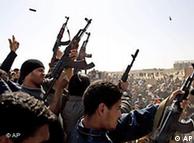
Rebels, who control large swathes of the country, have called for foreign air strikes against what they said were foreign mercenaries fighting for Gadhafi.
The Anglo-French warning came after talks in Paris between French Foreign Minister Alain Juppe and his British counterpart, William Hague. Britain and France want Gadhafi to stand down and were working on "bold and ambitious" proposals to put to a European Union leaders' meeting on Libya next week, the two ministers told reporters.
British Prime Minister David Cameron has said his country is considering plans for a military no-fly zone. France's Juppe said such an option could and should be considered but only if it was endorsed by a UN Security Council decision.
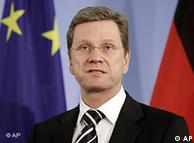
Guido WesterwelleWesterwelle said military intervention in Libya would be 'counterproductive'"France, for its part, does not think that in the current circumstances military intervention, NATO forces, would be welcomed in the south of the Mediterranean and could be counterproductive," Juppe said.
"That said, given the threats from Colonel Gadhafi, we have to be in a position to react and that is why we agreed to plans for a no-fly zone over Libya," he added.
Berlin rejects foreign military intervention
Meanwhile, Germany is against any foreign military intervention in Libya, Foreign Minister Guido Westerwelle said on Thursday.
"We do not participate, and we do not share a discussion of military intervention, because we think this would be very counterproductive," Westerwelle said at a meeting of central European foreign ministers in Slovakia.
"We want to see the (Gadhafi) family isolated," he added, without further explanation.
Westerwelle said the situation was not ripe to decide on imposing a no-fly zone over Libya.   "We are at the moment not in the situation to decide this .... we have many thousands of foreign citizens and we want to fly them out, this is the first point," he told reporters. He added it was crucial that any such decision is discussed in the United Nations.
Obama weighs options
In the United States, President Barack Obama publicly called on Gadhafi to stand down. He said he had asked his military and diplomatic advisers to examine "a full range of options" including a no-fly zone.
"We will continue to send a clear message: The violence must stop. Moammar Gadhafi has lost the legitimacy to lead and he must leave," Obama said.
Obama offered US aircraft to help move Egyptians stranded at the Libyan border with Tunisia and to aid refugees fleeing Libya. French and British aircraft have already been taking part in an international airlift and more airplanes and ships are due from other EU nations.
ICC investigates Gadhafi
In The Hague, the International Criminal Court (ICC) said on Thursday it will investigate Gadhafi, his sons and members of their inner circle for crimes committed by their security forces.
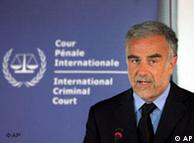
Prosecutor Luis Moreno-Ocampo said no one had the authority to massacre civilians after a bloody crackdown on demonstrators against Gadhafi's rule in which possibly thousands have died.
He said the court had identified several people at the top of the command chain who could be investigated. "They are Moammar Gadhafi, his inner circle, including some of his sons, who had this de facto authority. There are also some people with formal authority who should pay attention to crimes committed by their people."
ICC prosecutor Luis Moreno-Ocampo The ICC is to investigate Gadhafi for crimes against humanityThe United Nations Security Council imposed sanctions on Gadhafi and his family last Saturday, and referred Libya's crackdown on demonstrators to the court.
Gadhafi has vowed to stay in Libya and fight to the death since protests against his 41-year rule began in mid February, inspired by the popular uprisings in Tunisia and Egypt that ousted longstanding authoritarian rulers.
On the ground, in Libya's east, witnesses said a warplane for a second day bombed the oil terminal town Brega, 800 km (500 miles) east of Tripoli.
But events appeared to turn against Gadhafi, as rebels spearheading the unprecedented popular revolt pushed their frontline against government loyalists west of Brega, where they had repulsed an attack a day earlier.
The opposition fighters said troops loyal to Gadhafi had been driven back to Ras Lanuf, home to another major oil terminal and 600 km (375 miles) east of Tripoli.

Analysts remain skeptical about plans for a no-fly zone

Analysts remain skeptical about plans for a no-fly zone


As world powers consider imposing a no-fly zone over Libya, analysts say the measure, though part of NATO's range of capabilities, is controversial and fraught with risk.

 
Ibrahim Dabbashi, Libya's deputy United Nations ambassador, was one of the first to denounce leader Moammar Gadhafi and call for a no-fly zone over Libya. In an emotional speech, he spoke of the beginning of a genocide in his country which could only be halted through military intervention by the international community. But just how realistic is that option?
Carlo Massala, political analyst at the German army or Bundeswehr university in Munich pointed to a 2005 UN General Assembly meeting that committed itself to protect civilian lives. 
"The international community has a responsibility to protect people in every place where a massacre is being committed against a civilian population with genocide-like tendencies," Massala said, citing the 2005 resolution.
NATO members divided
But experts remain divided over whether the atrocities being committed in Libya amount to genocide. Besides, some say, the international community has so far been extremely hesitant in acting on its commitment to protect lives.
"Compared to what happened in Darfur a few years ago, Libya is still – though it sounds cynical – relatively harmless," Massala said. "And still, we didn't intervene in Darfur. Nations usually only intervene when they want to protect their own interests and not because of a higher obligation under international law to intervene."
The imposition of a no-fly zone or any far-reaching military intervention would require a clear mandate from the UN Security Council. Last week, the world body agreed on sanctions against Libya. But it remains doubtful whether it will show the same unity when it comes to a military intervention in Libya, even in the form of a no-fly zone.
China or Russia are likely to use their veto power to shoot down such a move. And then the West would be forced to act without a UN mandate.
‘A complex affair'
But doubts are also emerging among members of NATO, which alone has the military means, about imposing a no-fly zone over Libya.
Turkey remains firmly opposed to such a move whereas France and Germany are still hesitant. Henning Riecke, security policy expert at the German Council on Foreign Relations is equally skeptical:
"A no-fly zone is such a complex affair that it's unlikely to be set up soon," Riecke said. "NATO would be capable of imposing such a no-fly zone. But the question is how long should it stay, how large an operation it will entail and what exactly the UN mandate will include."
A no-fly zone is certainly part of a revamped NATO's range of military capabilities. With its "NATO Response Force", the security body now has a mobile force which can be deployed even outside Europe within a week, with up to 14,000 troops.
But any Libya operation carries special geopolitical risks. The desert nation is about five times the size of Germany. To monitor its vast territory from the air would require between 100 and 150 flights a day. Even NATO would be not be capable of sustaining that over a long period of time.
Analysts also doubt whether the imposition of a no-fly zone would be effective in ending the bloodshed in Libya.
"I think that no-fly zones would have no direct effect on the battles between Gadhafi's troops and rebel forces," Riecke said. "That means you would set the ball rolling on a very complex operation with very limited consequences for the actual fighting in the country."
Mixed record on no-fly zones
The international community does have some experience with no-fly zones. In 1991, it imposed one over northern Iraq to protect the Kurdish population from Saddam Hussein's air force. And in the mid-1990s, a no-fly zone was imposed due to a UN mandate in Bosnia-Herzegovina. But even in that case, it didn't suffice to prevent the massacre of more than eight thousand civilians in Srebrenica.
Analysts believe that in the present case in Libya, ground troops would be eventually required to effectively stop the murderous campaign by Gadhafi's militias against the country's opposition.
Many believe that the most likely military intervention will be in the form of a humanitarian relief operation for the hundreds of thousands of refugees who have fled to Libya's borders. For example, using cargo planes to transport tents, food and medicines to the refugee camps.
The fear now is that Libya's neighbors, Algeria and Egypt, will be prompted to send their own troops into the country to cope with the swelling tide of refugees.

Bahrain protesters refuse dialogue unless government resigns

Bahrain protesters refuse dialogue unless government resigns


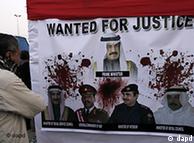
In Bahrain, protests are going into the third week. Demonstrators want political and economic reforms, urging the king to improve living conditions for the minority Shiites who feel disadvantaged.

 
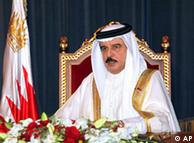
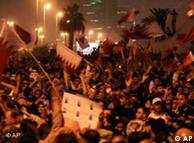
Thousands of people took to the streets again in Bahrain's capital Manama Tuesday to protest against the rule of King Hamad bin Issa el Khalifa. "We are brothers, Sunnis and Shiites," they chanted, making it the third week of protests in the kingdom with roughly one million inhabitants.
The majority of demonstrators are Shiites who feel repressed by the Sunni king and Sunni ruling elite. They claim they are shut out of good jobs, decent healthcare and housing.
Civil disobedience
Protesters on Pearl Square in central Manama also called for the start of a civil disobedience campaign to increase pressure on the ruling elite to implement swift democratic reforms in the Gulf Arab state. The protests also started to spread into other parts of the city.
"The purpose of civil disobedience is to put huge pressure on the regime," said one protester, addressing the crowd on Pearl Square, "and forcing it to follow through with the demands of the protesters."
Since the start of the protests, there has been no formal dialogue between the government and the Muslim Shiite opposition. 
The king has pardoned political prisoners, reshuffled the cabinet, increased housing allowances and appointed the crown prince to lead a national dialogue with the opposition.
No dialogue
But the opposition has rejected the king's offer for dialogue, with protesters on Tuesday waving banners that read "No dialogue - the people want the fall of the regime."
Seven people have been killed and hundreds wounded since protests began in Bahrain more than two weeks ago. Members of the Shiite Wefaq bloc quit parliament on Thursday over protester deaths at nearby Pearl Square, where demonstrators have since camped out to increase the pressure on the rulers.
But parliament has little power and the cabinet is appointed by the king. Most ministers are from the royal family. "There's one family ruling the country, in sports, politics and economics, everything is controlled by the royal family," said Ali Ibrahim, a protester. "The government needs to be elected," he said.
Tens of thousands of pro-government supporters have also taken to the streets in recent days, saying that reforms launched by Bahrain's king 10 years ago have resulted in a situation of freedom and democracy which is unique in the Gulf Arab region.

UN Security Council unanimously passes sanctions against Gadhafi

UN Security Council unanimously passes sanctions against Gadhafi

The UN Security Council has adopted measures against Moammar Gadhafi's regime in Libya over its attempts to crush a popular uprising. The sanctions were passed in New York by a unanimous vote.

The United Nations Security Council passed a resolution against Libyan leader Muammar Gadhafi late Saturday in a bid to halt his bloody crackdown on opposition protesters.
The resolution, unanimously adopted by all 15 nations on the Council, calls for an arms embargo, assets freeze and a travel ban on Gadhafi, four of his sons and a daughter. It also demands Gadhafi be referred to the International Criminal Court for alleged crimes against humanity.
"Today the Council has sent out a clear and strong message," Germany's ambassador to the UN, Peter Wittig, said in his address to the Council after the vote. "The international community will not tolerate the gross and systematic violation of human rights by the Libyan regime."

Wittig added that the "unanimous referral of the situation in Libya to the International Criminal Court demonstrates our resolve not to allow impunity."


"This is a clear warning to those who perpetrate systematic attacks against the civilian population that they will be held accountable," he said. 

A thousand dead

The UN estimates more than 1,000 people have died in the 10-day-old revolt.
But Turkey's Prime Minister Recep Tayyip Erdogan on Saturday warned that sanctions would do more harm to Libya’s people than to Colonel Gadhafi. 
"We call on the international community to act with conscience, justice, laws and universal humane values — not out of oil concerns," Erdogan said. 
Germany, Britain want tough sanctions
In a telephone conversation earlier Saturday, German Chancellor Angela Merkel and British Prime Minister David Cameron agreed on the need for urgent United Nations sanctions, the German government's deputy spokesman, Christoph Steegmans, said in a statement.
German Foreign Minister Guido Westerwelle told Sunday newspaper Frankfurter Allgemeine Sonntagszeitung that "a ruling family that wages such brutal war against its own people is finished."
"The dictator cannot stay," Westerwelle said.
On Friday, US President Barack Obama signed an executive order freezing the assets of Gaddafi, members of his family and senior officials. The president said he was also seizing Libyan state property in the US, to prevent it being misappropriated by Tripoli.
Caretaker government
As the UN moved to sanction Gadhafi's regime, a forming caretaker government in the liberated, second city of Benghazi received growing support from Libya's diplomats.
Libya's former Justice Minister Mustafa Abdel Jalil said he was assembling a new government to lead the country for three months to prepare for elections.
Libya's deputy UN ambassador said his delegation supported the caretaker government "in principle."
"We are seeking more information about it, but yes, I think we support it," he said.
Foreigners being evacuated
Meanwhile, in the wake of continued violence, thousands of foreign nationals continue to be evacuated from Libya by air, sea and land.
On Saturday, two British military transport aircraft picked up about 150 foreign nationals in the desert south of Benghazi, and flew them to the Mediterranean island of Malta.
Much of Libya, especially the east, is now controlled by anti-Gadhafi forces but the Libyan leader remains in control of the capital Tripoli.
Thousands of people, mostly economic migrants, have fled north Africa, headed for Europe in search of a better life.
In response to the exodus of migrants, Chancellor Angela Merkel said Saturday that it was in Germany's interest to invest in development projects to help establish stability and democracy there and thus prevent migration.
"We want to live in a world in which there are more and more democratic and stable structures, and people do not feel the need to leave their own countries and apply for asylum here, for example," Merkel said in her weekly video podcast.
Emotional speech
In an emotional address on Friday, the Libyan ambassador to the UN, Mohammed Shalgham urged the UN Security Council to act against the "atrocities," comparing Gadhafi to Khmer Rouge despot Pol Pot, Soviet leader Joseph Stalin and Nazi leader Adolf Hitler.
"I tell my brother Gadhafi - leave the Libyans alone," he said. "Please, the United Nations, save Libya. Let there be no bloodshed, no killing of innocents. We want a decisive, rapid and courageous resolution from you," Shalgham, a former childhood friend of Gadhafi, said.
Gadhafi's strongest European ally, Italian Prime Minister Silvio Berlusconi, said in Rome on Saturday that he no longer appeared to be in control of Libya.
"It seems that effectively Gadhafi no longer controls the situation in Libya... If we can all come to an agreement, we can end this bloodbath and support the Libyan people," Berlusconi said.

Sunday, February 6, 2011

The war against terrorisim and the USA foreign police

Sept.11 in the usa
  •  Area size of USA:
9,522,055 sq km (3,676,486 sq mi), including 204,083 sq km of inland water and 156,049 sq km of the Great Lakes that lie within U.S. boundaries but excluding 109,362 sq km of coastal water
Population
( est.): 305,146,000
Capital:
Washington, D.C.
Head of state and government:
President Barack Obama
 

USA war on terrorisim
Five years after leading the invasion that toppled Saddam Hussein, the U.S. negotiated with the new Iraqi democratic government for an eventual end to allied combat operations. The agreement capped a year of declining violence and increased government control in Iraq and represented a dramatic turnaround for U.S. policy, which had seemed destined for a humiliating defeat only two years earlier. It also cleared the way for redeployment of U.S. troops elsewhere, particularly into resurgent terrorist areas of Afghanistan. Outgoing president George W. Bush hailed the Iraqi developments as a major step forward for democracy and credited the 2007 U.S. military surge, but his year-end visit to Iraq ironically was marred by dramatic political protest.

Under U.S. pressure the Iraqi parliament took several steps to accommodate Iraq's Sunni minority and achieve ethnic reconciliation. In March the Shiʿite-dominated government deployed 30,000 Iraqi troops, accompanied by U.S. air support, into Basra in a successful thrust to depose the Mahdi Army, a radical Shiʿite militia that had long controlled the port city. Iraqi troops later entered and occupied Sadr City, a renegade Shiʿite section of Baghdad, without significant resistance.

As violence ebbed markedly during the year, the Iraqi government took over increasing responsibility for its domestic security. In September Anbar province, once the cradle of the Sunni insurgency against the central government, was turned over to full Iraqi control. The following month Iraq assumed responsibility for some 100,000 (mostly Sunni) fighters; these Awakening Council forces had previously been paid and supervised by the U.S. military.

At year's end Iraq and the U.S. signed a status-of-forces agreement that called for the removal of allied troops from Iraqi cities by mid-2009 and complete withdrawal of U.S. combat troops by the end of 2011. The agreement also gave Iraqi civilian authorities criminal jurisdiction over off-duty U.S. troops who committed infractions while away from their bases. Incoming U.S. president Barack Obama had campaigned for earlier withdrawal of U.S. forces within 16 months—or by May 2010. Obama later signaled, however, that he would listen to military advice and remain flexible on his timetable.

By year's end allied forces were withdrawing from Iraq, and the U.S. military presence was diminishing toward presurge levels of 135,000. According to the Associated Press, U.S. troop deaths in 2008 stood at 314, down from more than 900 in 2007. (A total of 4,221 U.S. soldiers had died in the conflict since it began in 2003.) Some Middle East experts suggested that the security improvements were largely the result of internal Iraqi political reconciliation. In a final visit to Baghdad on December 14, however, President Bush declared that his administration's policies deserved credit and called the surge “one of the greatest successes in the history of the United States military.” At a press conference that same day with Iraqi Pres. Nuri al-Maliki, in a highly publicized incident, an Iraqi journalist threw two shoes at Bush as a sign of disrespect. Bush ducked the shoes; the journalist was temporarily jailed; and critics noted that such political protest would have been inconceivable in Saddam's Iraq.

The military progress in Iraq was offset by renewed violence in Afghanistan as Sunni-dominated militant groups, including the Taliban and al-Qaeda, penetrated and challenged NATO forces in more than half of the country. In tacit recognition of the threat, U.S. Army Gen. David Petraeus, architect of the Iraq surge strategy, was elevated in October to head the U.S. Central Command, effectively taking control of allied military strategy in the war on terrorism, including the aggression in Afghanistan.

As Afghan terrorist violence increased during the year, several NATO countries augmented troop deployments. At year's end the U.S. had about 32,000 of 62,000 NATO combat troops in Afghanistan, including an additional 1,000 sent by President Bush in November as part of what he termed a “quiet surge.” U.S. forces were concentrated in the east, on the dangerous border with Pakistan; the U.S. pursued an active counterinsurgency program on both sides of the border that involved the use of unmanned drone airplanes equipped with missiles.

The Bush administration's legal strategy toward suspected terrorists suffered setbacks during 2008. In June the U.S. Supreme Court ruled, in a 5–4 decision, that even enemy combatants held outside the U.S.—at the U.S. detention facility at Guantánamo Bay, Cuba—had a right to a review of their cases in U.S. civilian courts. The ruling declared unconstitutional parts of two laws approved by Congress after 9/11 that were designed to allow indefinite detention of suspects and their eventual trial by military commissions. It further complicated dozens of pending combatant cases that were already burdened with charges of torture, withholding of evidence, and violations of international law by the U.S. military.

Two war crimes trials were concluded during the year, the first in the U.S. since World War II. Salim Hamdan, a former driver for Osama bin Laden, was convicted in August on reduced charges of having provided “material support for terrorism.” He received a modest sentence of five and a half years and was released at year's end. A second defendant, Ali Hamza al-Bahlul, a Yemeni accused of having produced propaganda for al-Qaeda, including videos, was convicted by a military commission at Guantánamo Bay in October and given a life sentence. Neither Bahlul nor his attorney participated in his defense.

In U.S. civilian courts, federal prosecutors won convictions in two antiterrorism criminal cases. In November, after a previous trial ended in a hung jury, the Holy Land Foundation and five former organizers were found guilty in Dallas of having funneled $12 million to the terrorist group Hamas. One observer alleged that the Muslim foundation's practice of supplying cash payments to Palestinian terrorists' families was the moral equivalent of car bombing. In December five foreign-born Muslims were convicted in New Jersey on charges that included having planned to kill U.S. soldiers at Ft. Dix. Defense attorneys claimed that the men were only talking and had planned no real violence, but prosecutors said that the convictions proved the effectiveness of the U.S. post-9/11 strategy of infiltrating violence-prone groups.

USA Foreign Policy.

U.S. relations with a resurgent and energy-rich Russia deteriorated further in 2008. Effects of heightened tensions could be seen worldwide as the two countries sparred over missile defense, Latin America, Iraq, Iran, and Russia's invasion of a province of Georgia. In one example, Russia almost single-handedly blocked U.S. efforts to ratchet up UN sanction pressure on Iran over its refusal to allow nuclear inspections. By year's end some commentators were saying that U.S.-Russia relations were at their lowest ebb since the end of the Cold War nearly two decades earlier.

In April, under U.S. prodding, NATO agreed that it would eventually accept Georgia, Russia's southern neighbour, as a member—even though Russia opposed NATO's eastward expansion and viewed it as a security threat. Four months later, Russian troops invaded two rebellious Georgian provinces, South Ossetia and Abkhazia, and recognized them as independent states. NATO stepped up its military presence in the region, with U.S. warships delivering relief efforts to Georgia via the Black Sea. In what was widely viewed as a response, Russia dispatched a military flotilla to Venezuela in November in a show of support for Pres. Hugo Chávez, a critic of the U.S., and at year's end Moscow also staged a rare Russian navy visit to Cuba.

With Chávez and Cuba's Raúl Castro in the lead, Latin American leaders formed a South American union (Unasur) and took other steps aimed at reducing U.S. influence in the region. A group of 33 countries staged a summit meeting in Brazil in December, pledging internal cooperation and welcoming Cuba after having failed to invite U.S. representatives.

Efforts to prevent nuclear weapons proliferation suffered setbacks during the year. No progress was made in stopping nuclear development in either Iran or North Korea or in numerous Middle Eastern countries that were nervous about a potential threat from Iran; a number of Middle Eastern countries had initiated steps toward starting their own nuclear programs. Iran, continuing to insist that its nuclear development was solely for civilian energy purposes, persisted in stonewalling international watchdogs, even while Russia supplied Iran with uranium for enrichment and processing that could be diverted to weapons purposes. At midyear, in Geneva, U.S. authorities engaged in direct talks with Iranian nuclear negotiators for the first time and also joined major powers in offering yet another package of incentives for Iranian abandonment of its nuclear ambitions. Iran continued to obfuscate, however, and Congress tightened U.S. economic sanctions on Iran in September.

After agreeing in 2005 to scrap its nuclear weapons program in return for normalized world relations, North Korea accepted promised food and fuel assistance from the U.S. and allies. As a show of good faith, Pres. George W. Bush removed Pyongyang from an international blacklist as a state sponsor of terrorism. In December five countries met to persuade North Korea to accept a verification regime written by its ally, China. The talks collapsed, however, when the North Koreans refused to sign the agreement, with analysts speculating that they were waiting for more favourable terms from the new U.S. administration. Prior to the breakdown, the U.S., Russia, China, and South Korea had already delivered 500,000 tons of fuel oil promised to North Korea for its cooperation.

The U.S. continued to push for rapprochement between India and Pakistan, both to facilitate critical support for antiterrorism efforts and to counter growing Chinese influence in Asia. In October the U.S. signed an agreement to supply technological aid for India's nuclear program, even though India had tested nuclear weapons and refused to sign the Non-proliferation Treaty. In November, after Pakistan-based terrorists staged a bloody raid on Mumbai (Bombay), U.S. Secretary of State Condoleezza Rice visited the subcontinent to pressure both countries to continue normalizing relations. (See Special Report.)
 

Saturday, February 5, 2011

The records of major disasters happened in the world history

Aviation

January 23, Poland. A Spanish-built CASA transport plane carrying members of the Polish air force home from a conference on flight safety in Warsaw crashes near the town of Miroslawiec; all 20 aboard are killed.

February 21, Venezuela. A Santa Barbara Airlines ATR 42-300 turboprop crashes into a mountainside in Sierra La Culata National Park shortly after takeoff from Mérida; all 46 aboard are killed.

April 3, Suriname. A Blue Wings Airlines Antonov An-28 airliner crashes on its approach to the airport in Benzdorp; all 19 aboard lose their lives.

April 15, Democratic Republic of the Congo. An airliner taking off from the airport in Goma crashes into a busy market neighbourhood and bursts into flames; more than 40 people, most of them on the ground, are killed.

April 28, Black Sea. A Ukrainian Mi-8 helicopter plummets into the Black Sea after its tail hits an offshore drilling platform; 19 of the 20 aboard die in the crash.

May 2, The Sudan. A Beechcraft 1900 airplane crashes near Rumbek, killing at least 23 people, including the southern Sudan's minister of defense, Dominic Dim.

May 29, Panama. A helicopter carrying Chilean police officials from Colón to Panama City, where they had been attending a meeting of Latin American antiterrorism leaders, crashes on top of a building; at least 15 people, including the head of Chile's national police force and at least 4 people on the ground, are killed.

June 10, Khartoum, The Sudan. A Sudanese airliner bursts into flames after landing; at least 30 of the 214 people aboard are incinerated.

August 20, Spain. An MD-82 airliner operated by the low-cost carrier Spanair and bound for the Canary Islands goes off the end of the runway at Madrid Barajas International Airport on takeoff and bursts into flames; at least 154 of those aboard perish.

August 24, Kyrgyzstan. A passenger jet bound for Iran crashes shortly after takeoff from Manas International Airport in Bishkek, killing at least 64 passengers; 22 survive.

September 1, Democratic Republic of the Congo. A small plane crashes into a mountainside during a thunderstorm; all 17 aboard, most of them aid workers, are feared dead.

September 14, Russia. While traveling from Moscow to Perm, a Boeing 737 passenger jet operated by an Aeroflot subsidiary crashes when preparing to land; all 88 aboard die.

October 8, Nepal. A Yeti Airlines Twin Otter airplane attempting to land at tiny Lukla Airport in the Himalayan Mountains catches its wheels on a security fence and crashes; 18 of the 19 people aboard, including 12 Germans and 2 Australians, are killed.


Fires and Explosions

January 7, Inch'on, S.Kor. Fire breaks out at a newly built cold storage facility; some 40 people are believed to have lost their lives.

January 31, Istanbul. An explosion, likely caused by fireworks ignited by an earlier fire, destroys a building; at least 22 people die in the blast.

March 15, Near Tirana, Alb. A series of strong explosions at a munitions depot kills 26 people and injures more than 300.

March 26, Xinjiang province, China. As authorities attempt to destroy illegal fireworks outside the city of Turpan, an unplanned explosion occurs; 22 people are reported killed.

April 7, Uganda. A fire in a dormitory for a girls' elementary school outside Kampala kills 19 schoolgirls and 2 adults; the cause is unclear, and reports indicate that the doors may have been locked from the outside.

April 26, Casablanca, Mor. A four-story mattress factory goes up in flames; at least 55 people succumb.

May 15, Nigeria. A fuel pipeline in a village near Lagos is ruptured by road construction equipment, causing much of the area to be engulfed in flames; some 100 people are killed.

August 1, Balcilar, Tur. A gas explosion causes the collapse of a three-story girls' dormitory; at least 17 students are crushed to death.

August 26, Guangxi autonomous region, China. A series of explosions in the Guangxi Guangwei Chemical Co. factory that last for seven hours leave at least 20 workers dead in Yizhou.

August 28, Limani, Cameroon. After an oil tanker overturns, residents rush to salvage the leaking gasoline, but a spark from a passing bus causes an explosion and fire; dozens of people, including passengers on the bus, are incinerated.

September 20, Guangdong province, China. In Shenzhen ignited fireworks cause a fire in a nightclub that leaves at least 43 people dead.

October 23, Rajasthan state, India. A powerful explosion demolishes an illegal fireworks factory in the village of Deeg; at least 26 people lose their lives.

December 24, Yevpatoria, Ukraine. An explosion destroys an apartment building, and at least 19 people are killed; it is thought that oxygen tanks stored in the basement may have been the cause.


Marine

February 21, Near Itacoatiara, Braz. The Almirante Monteiro, a ferry, collides with a barge in the Amazon River and sinks to the bottom; some 20 people are feared lost.

February 28, Near Dhaka, Bangladesh. A ferry collides with another vessel in the Buriganga River; at least 39 passengers are killed.

March 3, Bay of Bengal. A wooden trawler carrying would-be migrants to Malaysia from Bangladesh and Myanmar (Burma) is found drifting by the Sri Lankan navy; 20 of the more than 90 passengers have died of starvation and dehydration.

March 6, Albania. A boat that is used to carry customers to and from a restaurant on Lake Farka near Tirana sinks; 16 people, most of whom had attended a birthday party at the restaurant, are drowned.

March 22, Off Hong Kong's Lantao Island. A Ukrainian tugboat collides with a Chinese freighter and sinks; 18 crew members are feared lost.

April 1, Nigeria. In Kano state, a dugout canoe carrying a wedding party capsizes; at least 40 people, including the bride, drown.

April 20, Off the Bahamas. Rescue workers find the bodies of 20 drowned Haitians in the sea as well as three survivors; the vessel that had been carrying them is not found.

May 4, Brazil. The wooden ferry Comandante Sales, carrying a group of some 80 partygoers, capsizes and sinks in the Solimões River; at least 41 people drown.

May 12, Bangladesh. A ferry on the Ghorautra River goes down quickly in bad weather; at least 44 people die.

May 19, Democratic Republic of the Congo. An overloaded passenger boat sinks in a storm on Lake Tanganyika; dozens of people are lost.

June 7, Libya. A boat carrying would-be migrants to Italy capsizes shortly after departing from Zuwarah; at least 40 people are drowned, with a further 100 missing.

June 21, Philippines. The MV Princess of Stars, a large ferry, capsizes and sinks in a typhoon off the island of Sibuyan; some 800 people perish. July 22, Democratic Republic of the Congo. A motorboat carrying passengers from Mobayi Bongo to the Central African Republic sinks in the Ubangi River; at least 47 people drown, with a further 100 missing.

August 27, South of Malta. An overloaded boat that left Zuwarah, Libya, carrying would-be migrants from The Sudan and Eritrea takes on water and sinks; 71 people are feared lost.

August 29, Bihar state, India. An Indian army boat rescuing victims of the flooding disaster that caused the Kosi River to change course capsizes; some 20 flood victims and soldiers drown.

November 3, Yemen. The international group Doctors Without Borders reports that 60 bodies have washed up onto the shores over the past two days; the dead had put out from Boosaaso, Som., in boats, and some had been forced overboard by smugglers, while one boat capsized.

November 4, Philippines. An inter-island ferry bound for Sorsogon goes down in bad weather; at least 40 people perish.

November 8, Sea of Japan. A Russian nuclear submarine undergoing testing suffers an accident with its fire-extinguishing system that fills two compartments with Freon gas, asphyxiating at least 20 workers.

December 14, Philippines. An overloaded ferry just entering the mouth of the Cagayan River capsizes; at least 23 passengers drown, with 33 others missing.


Mining and Construction

January 11, Kazakhstan. An ArcelorMittal-owned coal mine suffers a gas explosion; at least 30 miners are killed.

January 16, Morocco. An apartment building under construction in Kenitra collapses, killing at least 16 workers.

January 21, Shanxi province, China. As miners attempt to reopen a shaft in a closed mine, an explosion takes place that kills at least 20 people.

August 9, Boussoukoula, Burkina Faso. At an illegal gold mine, rain causes a mine collapse and mud slide in which at least 34 workers are buried, with dozens more reported missing.

September 20, Hegang, Heilongjiang province, China. A coal mine fire leaves 19 miners dead and 12 missing.

September 21, Henan province, China. A gas explosion in a coal mine kills at least 37 miners; 9 are missing.

November 7, Pétionville, Haiti. A third floor is being added to a church-run school when the building collapses, crushing to death at least 91 schoolchildren and teachers.

November 15, Hangzhou, Zhejiang province, China. A section of a subway tunnel that is being constructed collapses; at least 21 people are killed.

December 27, Hunan province, China. A construction crane collapses in downtown Changsha, killing at least 17 workers.


Natural

January 9, Iran. Authorities in Iran say that a disastrous blizzard in the Tehran area has resulted in the deaths of at least 28 people; Tehran declares a two-day national holiday so that people will stay home.

January 17, Afghanistan. Officials report that an unusually hard winter has left at least 200 people dead; huge numbers of livestock have also perished.

January 28, China. The government issues a severe weather warning for eastern and central China, areas that have already received record-setting amounts of snow, causing a transportation crisis and leaving at least 24 people dead.

February 3, Africa. A series of earthquakes takes place in the Great Lakes region, killing some 40 people (34 in Rwanda and 6 in the Democratic Republic of the Congo) and injuring more than 400.

February 5, U.S. A fierce outbreak of tornadoes leaves a path of destruction in several southern states, particularly in Tennessee, where at least 30 people are killed, and Arkansas, which suffers a death toll of at least 13; a further 7 people are reported killed in Kentucky and 4 in Alabama.

February 8, Indian-administered Kashmir. Heavy snowfall in the region triggers avalanches that result in the deaths of at least 20 people.

February 10, China. Officials say that power and transportation are beginning to be restored in some areas where the worst winter storms in 50 years have led to at least 60 deaths.

February 12, Northern Bolivia. Pres. Evo Morales declares a national disaster because of flooding following heavy rains that has left at least 60 people dead.

February 16, Afghanistan. Authorities say the harshest winter in 30 years has left 926 people dead so far, 462 of them in Herat province, and hundreds of thousands of cattle have also succumbed.

February 17, Madagascar. A particularly ferocious storm, Cyclone Ivan, makes landfall on the east coast, all but destroying the village of Ambodihazinina, leaving more than 80 people dead, and devastating the ripening rice crops.

February 21, Eastern Philippines. After two weeks of torrential rains, at least 20 people have died in flooding and landslides, tens of thousands of people have been displaced, and great damage has been caused to infrastructure and to rice fields.

April 7, Democratic Republic of the Congo. Humanitarian officials report to the UN that torrential rains in the Kasaï-Occidental and Bandundu provinces have left at least 15 people dead and hundreds homeless.

May 2–3, Myanmar (Burma). Cyclone Nargis, an extraordinarily strong tropical cyclone that formed in the Bay of Bengal and quickly strengthened to a category 4 storm, makes landfall in Myanmar (Burma) and throughout the night churns up the densely populated rice-growing region of the Irrawaddy River delta, cutting a wide path of destruction augmented by a 4-m (12-ft) storm surge that obliterates coastal villages; some 138,000 people perish.

May 10, United States. A violent storm system spawns tornadoes that lay waste to portions of Oklahoma, Missouri, and Georgia, leaving more than 23 people dead, at least 15 of them in Missouri and most of those near Racine.

May 12, Sichuan province, China. A magnitude-7.9 earthquake devastates the area; at the epicentre, in Wenchuan, some 80% of the structures are flattened. At least 69,000 people lose their lives, 18,000 more are missing, and hundreds of thousands are made homeless.

May 14, Uttar Pradesh state, India. A violent storm leaves at least 128 people dead and all but destroys the important mango crop.

June 17, Southern China. The death toll from flooding caused by incessant heavy rains rises to 171; more than a million people have been evacuated.

June 20, India. Authorities say that the death toll from flooding resulting from heavy rain in eastern and northeastern areas of the country has risen past 50; thousands of villages are reportedly submerged.

June 21, Philippines. Typhoon Fengshen smashes into the Philippines; at least 498 residents perish.

July 27, Ukraine and Romania. Officials report that five days of heavy storms have left a total of 13 people dead in Ukraine and 5 others dead in Romania; some 8,000 people in the region have been evacuated.

August 10, Southern India. Officials report that monsoon rains caused the deaths of at least 59 people, not including the 40 people who are swept away when a truck in which they are riding fails to negotiate a flooded bridge in Andhra Pradesh state.

August 18, Southeast Asia. It is reported that over the past week, record flooding has caused devastation throughout much of the region, with thousands of residents forced from their homes and at least 160 people dead in Vietnam alone.

August 18, Bihar state, India. As a result of heavy rains that cause the breach of a dam in Nepal, the Kosi River breaks its embankments and changes course to flow in an old channel some 120 km (75 mi) east, inundating villages in Nepal and Bangladesh as well as in India; a minimum of two million people are left homeless and at least 90 dead.

August 26, Hispaniola. Hurricane Gustav makes landfall in Haiti and the Dominican Republic; at least 84 people are killed, and thousands of homes are ruined.

August 30, Sichuan province, China. A magnitude-5.7 earthquake with its epicentre some 35 km (22 mi) southeast of Panzhihua causes houses to collapse in several villages and leads to the deaths of at least 28 people.

September 6, Egypt. The Muqattam cliffs outside Cairo begin to collapse, loosing hundreds of pounds of rocks and boulders that crush a shantytown in the shadow of the cliffs; dozens of people are killed.

September 6, Haiti. After a week of flooding caused by Tropical Storm Hanna, at least 529 people have perished, most of them in Gonaïves.

September 8, Haiti. Hurricane Ike sweeps through Haiti, leaving at least 58 people dead.

September 13, Texas. Hurricane Ike spreads heavy flooding throughout Galveston and Orange and causes extensive damage in Houston; some 51 people in the region succumb, 20 of them in Texas.

September 22, India. The death toll from three days of heavy monsoon rains is reported to have reached 119.

September 28, Vietnam. Authorities report that Typhoon Hagupit has caused flooding that has left at least 41 people dead; the storm had earlier killed some 8 people in the Philippines and 17 people in China.

October 2, Algeria. Torrential rains cause a flash flood in a normally dry river in the Sahara; the town of Ghardaia is inundated, with some 600 homes destroyed and at least 33 people killed.

October 3, Haiti. The civil protection agency reports that the total death toll in the country from Hurricanes Gustav and Ike and Tropical Storms Hanna and Fay in August and September is 793.

October 5, Kyrgyzstan. A magnitude-6.6 earthquake strikes, killing at least 72 people and flattening the village of Nura.

October 25, Yemen. After two days of heavy rain from a tropical storm, massive flooding along the Wadi Hadramawt leaves at least 180 people dead and some 20,000 people displaced.

October 29, Balochistan province, Pakistan. A shallow magnitude-6.4 earthquake strikes, killing at least 215 people and leaving some 15,000 homeless at the beginning of winter.

November 7, Vietnam. Authorities report that unseasonal flooding in recent weeks has left at least 82 people dead and led to an outbreak of dengue fever.

November 24, Southern Brazil. Officials report that flooding and landslides have left at least 59 people dead and displaced some 43,000 others; by December 1 the death toll has risen to a minimum of 116.


Railroad

April 28, Shandong province, China. Outside the city of Zibo, a high-speed passenger train traveling from Beijing to Qingdao derails and hits another passenger train en route from Yantai to Xuzhou; at least 70 people are killed.

July 16, Northern Egypt. A truck rear-ends a car waiting at a railroad crossing, pushing three vehicles onto the tracks, where they are crushed by a train; at least 40 people are killed.

August 1, Andhra Pradesh state, India. Five of the 13 cars of the Secunderabad-Kakinada Gautami Express train become engulfed in flames; at least 30 passengers expire.

September 12, Los Angeles. A commuter train crashes head-on into a freight train, killing at least 25 people, when the engineer fails to stop at a red signal; it is thought that he may have been distracted by text messaging on his cell phone.


Traffic

January 12, Port Harcourt, Nigeria. A fuel tanker truck blows a tire and overturns; the fuel spills and ignites, incinerating at least 30 people.

January 20, India. Near the town of Nashik, an overloaded bus carrying pilgrims from a visit to Hindu shrines fails to negotiate a hairpin turn and plunges over a mountainside; at least 37 of the passengers are killed.

January 26, Near Jerash, Jordan. A passenger bus traveling from Irbid to Al-ʿAqabah collides with a water truck, and both vehicles fall off the road into the valley below; at least 20 people are killed.

January 29, China. In Guizhou province, which is among those suffering prolonged severe winter storms, a bus goes off an ice-coated road; at least 25 passengers perish.

February 7, Egypt. Some 100 km (60 mi) south of Cairo, a bus collides with a minibus in heavy fog, and some six more vehicles crash into them; at least 29 people are killed in the pileup.

February 29, Southern Guatemala. A greatly overloaded bus crashes while taking a dangerous corner near Jutiapa; at least 45 passengers perish.

March 25, Western Honduras. A passenger bus goes off a highway in the mountains and rolls down a hillside; at least 26 of those aboard are killed.

April 16, Gujarat state, India. In Vadodara a state bus carrying schoolchildren goes off a bridge and falls some 18 m (60 ft) into a canal of the Narmada River; at least 44 children and 3 adults perish.

April 23, Rajasthan state, India. Northwest of Jodhpur, late at night, a truck and a crowded van collide; at least 24 of the van passengers lose their lives.

May 27, KwaZulu-Natal province, South Africa. A bus goes over a cliff and falls some 80 m (260 ft), landing upside-down in the river below; at least 30 people die.

May 29, Southern India. A truck carrying at least 70 people to a wedding falls off a bridge after the driver swerves to avoid electrical wires on the road; at least 39 of the passengers perish.

July 8, Southern Bolivia. A truck carrying some 60 people as well as goods goes off a mountain road, plunging 200 m (650 ft) into a ravine; at least 47 people, among them 12 children, die.

August 2, Bihar state, India. A truck loaded with food grain sacks and people goes off a road into a nearly dry culvert below; at least 40 people die, most of them crushed to death.

August 8, Near Sherman, Texas. An illegally operated chartered bus carrying Vietnamese Roman Catholics to a religious gathering in Carthage, Mo., goes over a guardrail in a crash, killing 17 passengers.

August 15, Dominican Republic. On the highway between La Romana and Higüey, a passenger bus attempting to go around a parked vehicle hits another passenger bus head-on; at least 20 people are killed.

September 8, Eastern Turkey. A bus carrying Iranian tourists in Agri province goes off the road and crashes; at least 16 passengers die.

October 10, Eastern Thailand. On an overnight trip to the coast from a technology university in Khon Kaen province, a bus carrying students crashes into a hillside; at least 22 people are killed, and 50 are badly hurt.

November 4, Near Hannover, Ger. A tour bus carrying elderly passengers home after a day trip to a farm catches fire, possibly because a passenger smoked a cigarette in the bus's restroom; at least 20 people die.

November 15, Near Boromo, Burkina Faso. A collision occurs between a passenger bus carrying workers to Côte d'Ivoire and a commercial truck loaded with sugar, and both vehicles burst into flames, trapping the bus passengers; at least 66 of them perish.

December 16, Israel. A bus transporting Russian tour guides to the resort town of Elat from a nearby airport goes off the road and rolls down a mountain slope; at least 24 of the passengers are killed.

December 27, Tangail, Bangladesh. A truck leaves the road in thick fog and goes into a ditch; at least 24 of the passengers, most of whom were heading home from Dhaka to vote in legislative elections, die.


Miscellaneous

March 29, Luanda, Angola. Dozens of people are crushed to death when a seven-story building housing the headquarters of the police criminal investigation department collapses; the structure had been deteriorating and recently had a large electrical generator installed on its roof.

April 9, Southern Thailand. In a truck carrying illegal Myanmarese (Burmese) migrant workers, 54 of the 121 crammed inside suffocate.

May 20, India. It is reported that at least 110 people in the Bengaluru (Bangalore) area have died in the past few days after drinking illicit alcohol; by May 22 the death toll has risen to 180.

August 3, Himachal Pradesh state, India. Near the Naina Devi temple, fears of a landslide lead to a stampede in which more than 150 pilgrims, most of them women and children, lose their lives.

September 15, Pasuruan, Indon. A Ramadan tradition in which wealthy families give money to the poor results in tragedy when pushing in a crowd awaiting such handouts causes at least 23 people to be crushed to death.

September 30, Jodhpur, Rajasthan state, India. On the first day of a nine-day festival devoted to the Hindu goddess Durga, a stampede possibly caused by pilgrims slipping on coconut milk offerings causes at least 224 people to be trampled to death.

October 1, Tabora, Tanz. At an event in a disco hall to celebrate ʿId al-Fitr, overcrowding among the young people attending engenders panic, and 19 children are crushed in the ensuing stampede.

Subscribe